What Not To Flush Down The Toilet is something homeowners search for constantly and for good reason. Most plumbing clogs don’t happen because of “mystery issues.” They happen because items people think are safe to flush actually never break down inside your pipes. What disappears with a flush doesn’t necessarily dissolve like toilet paper, and over time those items can create major blockages, backups, or even sewer line damage.
As a plumbing service provider in the community for years, we’ve seen it all! Slow drains, overflowing toilets, damaged sewer lines, and repairs costing hundreds to thousands of dollars, all because the wrong things were flushed. Below is the ultimate guide to what not to flush down the toilet, why these items are harmful, and what to do instead.
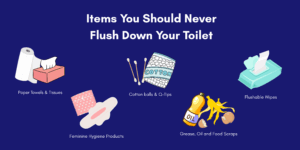
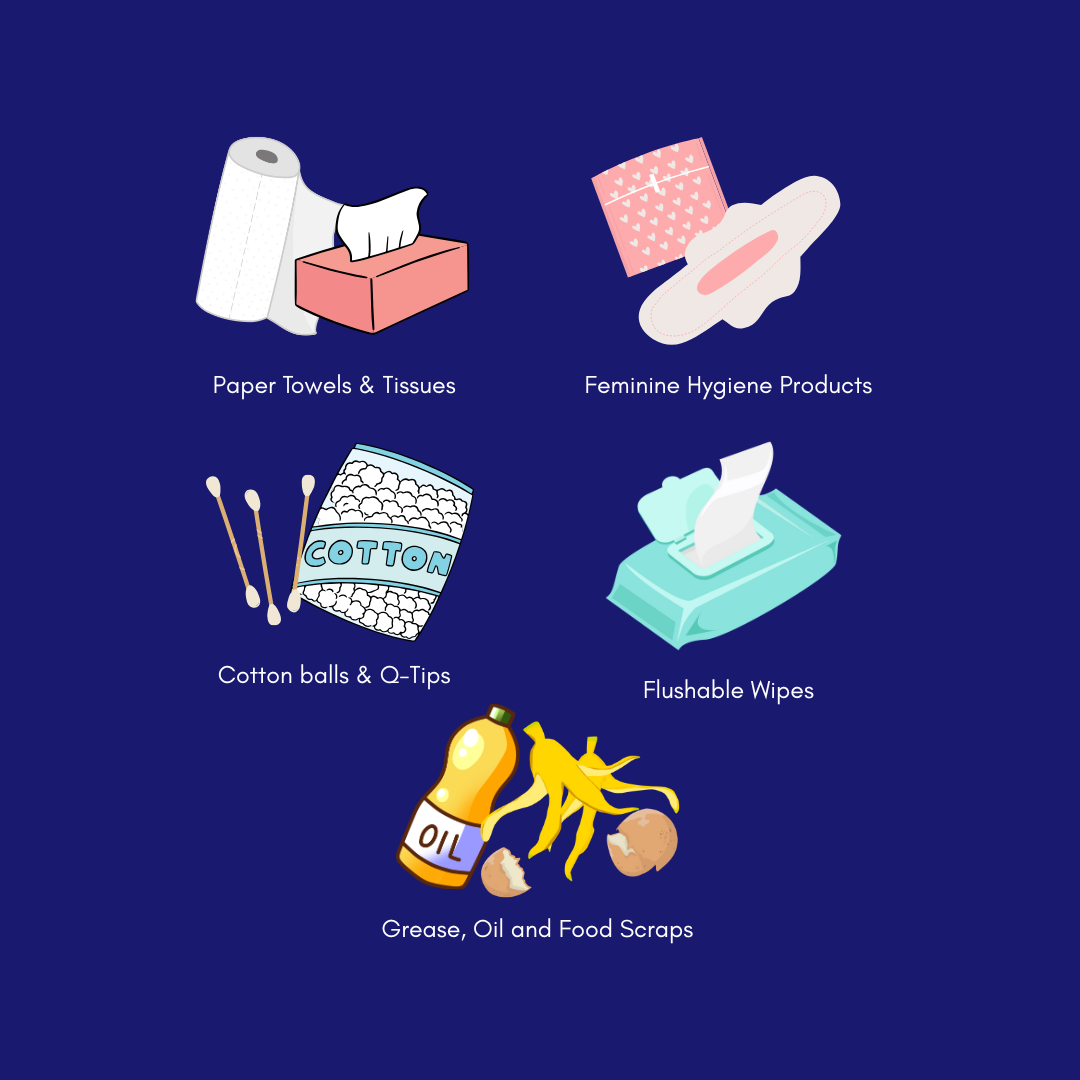
Flushable Wipes (They’re Not Really Flushable)
Even though the packaging claims they’re safe to flush, flushable wipes do not break down like toilet paper. They remain fully intact, stick to grease, and create long, rope-like clogs inside your plumbing lines. Many major cities have documented massive sewer blockages called fatbergs, and flushable wipes are one of the biggest contributors.
Better option: Keep a small trash bin near your toilet and throw used wipes away instead of flushing them.
Paper Towels & Tissues
Paper towels and facial tissues are engineered to absorb, not dissolve. They are thicker, stronger, and designed to stay intact even when soaked. This makes them one of the fastest ways to block your toilet or cause buildup deep in the sewer line.
If it’s not toilet paper, don’t flush it!
Feminine Hygiene Products (Pads, Tampons, Liners)
Pads, tampons, and liners expand significantly when they get wet. Inside your drain line, these products swell, wedge into pipe bends, and create stubborn clogs that require professional removal. They also never fully break down in water.
Proper disposal: Wrap them and toss them in the trash.
Cotton Balls, Cotton Rounds & Q-Tips
Small doesn’t mean safe. Cotton fibers clump together, stick to pipe walls, and slowly turn into thick clog material. Over time, these small items can cause slower drains and eventually a full blockage.
Promise, your plumbing will thank you for keeping them out of the toilet.
Grease, Oil & Food Scraps
Some people treat the toilet like a backup garbage disposal, but flushing food, fats, oils, or grease is one of the most damaging habits for your plumbing system.
-
Grease hardens as it cools and forms a sticky coating on pipe interiors.
-
Food scraps swell in water, trap debris, and create sludge-like blockages.
-
Coffee grounds and fibrous waste don’t break down and can accumulate quickly.
When you combine grease + food + wipes, you create the perfect storm for major (and expensive) plumbing repairs.
The Golden Rule: If It’s Not Toilet Paper… Don’t Flush It
Most plumbing problems start with flushing items that simply weren’t meant to go down a toilet. Even when something disappears instantly, that doesn’t mean it’s breaking down safely. Over time, these items build layers inside your pipes until water can’t flow through.
If you notice:
-
slow drains
-
bubbling water
-
gurgling sounds
-
a toilet that clogs frequently
…it’s best to get your plumbing inspected before it becomes a bigger issue.
Need Help? Our Local Plumbing Services Are Here for You
If you’re dealing with clogs, backups, or ongoing toilet issues, our team can diagnose the problem quickly and help prevent future damage. From drain cleaning to sewer line inspection, we’re here to keep your home running smoothly.
You can explore our plumbing services here.